
What Are Macronutrients? A Complete Guide to Healthy Eating
What Are Macronutrients?
Macronutrients are the essential nutrients the human body requires in large quantities to provide energy, support growth, and maintain vital functions. These nutrients—carbohydrates, proteins, and fats—are the primary building blocks of your diet and are measured in grams. Unlike micronutrients (vitamins and minerals), which are needed in trace amounts, macronutrients provide the caloric energy necessary for physical activity and metabolic processes.
The Three Pillars of Nutrition
Understand how your body functions, you must break down the three main types of macronutrients. Each plays a distinct role in keeping you alive and energized.
1. Carbohydrates: The Body's Primary Fuel
Carbohydrates are the most efficient source of energy for your brain and muscles. When consumed, they are broken down into glucose, which enters the bloodstream to fuel cellular activity.
Simple Carbohydrates: Found in fruits and refined sugars; they provide quick energy bursts.
Complex Carbohydrates: Found in whole grains and vegetables; they offer sustained energy due to their fiber content.
2. Proteins: The Building Blocks
Proteins are essential for the growth, repair, and maintenance of body tissues. They are made up of amino acids, often referred to as the "building blocks" of life. Beyond muscle repair, proteins are vital for hormone production and immune function.
3. Fats: Energy Storage and Hormone Health
Contrary to old dietary myths, fats are indispensable. They provide a concentrated source of energy, protect internal organs, and facilitate the absorption of fat-soluble vitamins (A, D, E, and K).
Caloric Density of Macronutrients
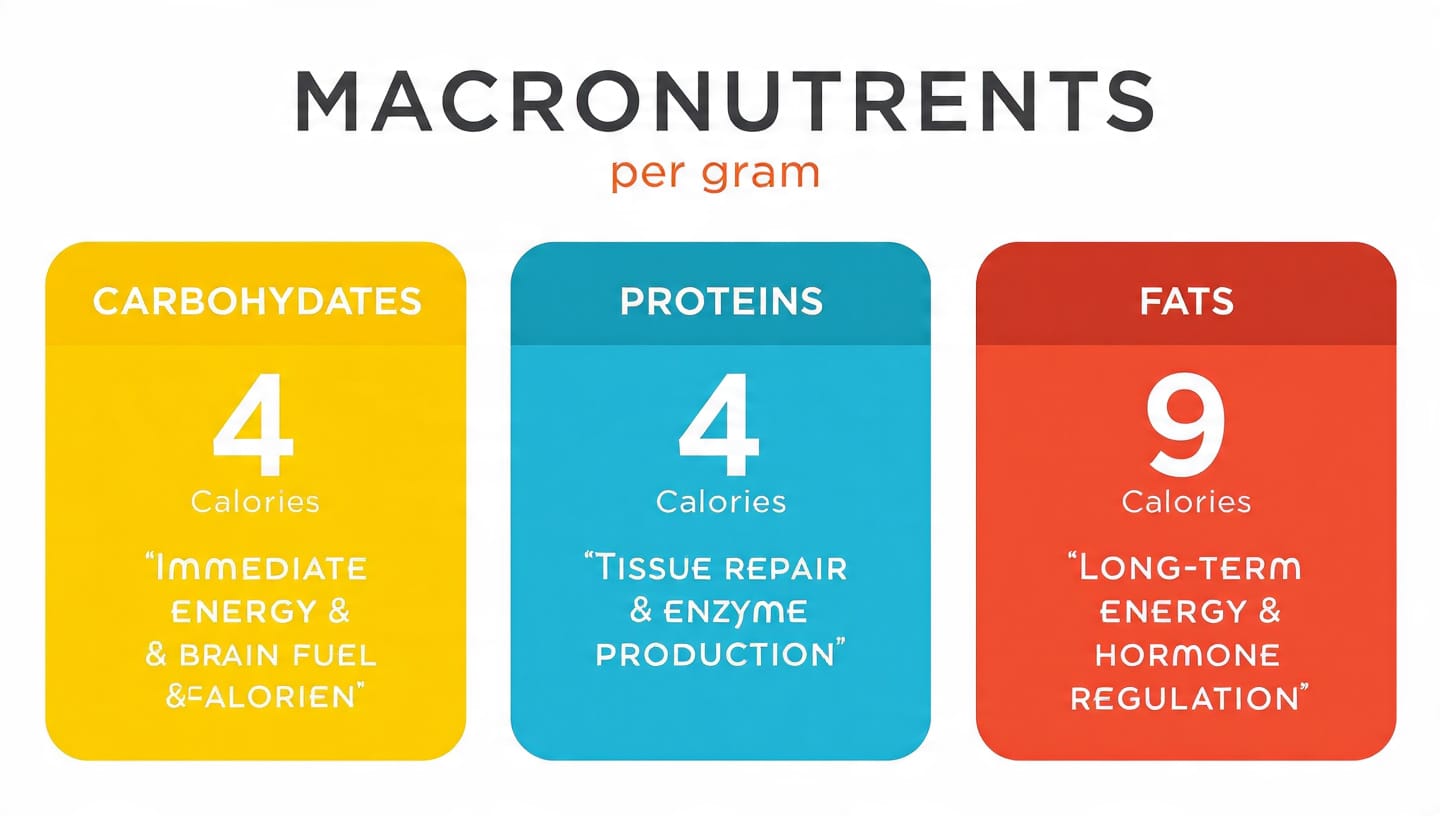
Each macronutrient provides a specific amount of energy per gram. Understanding these values is crucial for weight management and performance tracking.
Carbohydrates - Calories per Gram - 4, Proteins - Calories per Gram - 4 Calories, Fats Calories per Gram - 9 Calories
Why Macronutrients Matter for Your Health
Balancing your "macros" is more than just a fitness trend; it is a physiological necessity. A well-proportioned intake ensures that your body isn't just surviving, but thriving.
Energy Regulation
Carbohydrates prevent the body from using protein as an energy source. This is known as the "protein-sparing effect," allowing protein to focus on its primary job of muscle preservation rather than being burned for fuel.
Metabolic Support
Fats are the structural components of cell membranes. Without adequate fat intake, your body cannot produce essential hormones like testosterone and estrogen, leading to metabolic imbalances and fatigue.
How to Calculate Your Macronutrient Needs
Your ideal macronutrient split depends on your age, activity level, and health goals (e.g., muscle gain vs. weight loss).
Determining Your Total Daily Energy Expenditure (TDEE)
Before setting macro targets, you must know your TDEE, which is the total number of calories you burn in a day.
Common Macronutrient Splits
While there is no "one size fits all" ratio, the following ranges are widely accepted by health organizations:
Carbohydrates: 45%–65% of total daily calories.
Proteins: 10%–35% of total daily calories.
Fats: 20%–35% of total daily calories.

Best Food Sources for Each Macronutrient
To optimize your health, focus on whole-food sources rather than processed options.
High-Quality Carbohydrates
Quinoa and Brown Rice (Complex carbs/Fiber)
Sweet Potatoes (Starchy energy)
Berries and Leafy Greens (Micronutrient-dense carbs)
Lean Protein Sources
Animal-Based: Chicken breast, turkey, wild-caught fish, and eggs.
Plant-Based: Lentils, chickpeas, tofu, and tempeh.
Healthy Fat Sources
Monounsaturated Fats: Avocados and olive oil.
Polyunsaturated Fats: Walnuts, flaxseeds, and fatty fish (Omega-3s).
Macronutrients vs. Micronutrients: The Difference
While this guide focuses on macronutrients, it is important to distinguish them from micronutrients.
Quantity: Macros are consumed in grams; micros are consumed in milligrams or micrograms.
Energy: Macros provide calories (energy); micros do not provide calories but act as co-factors for chemical reactions.
Structure: Macros provide the physical structure of your body (muscle and fat); micros maintain the internal systems (bone density, vision, and immune response).
The Role of Fiber and Water
Though often categorized separately, fiber is a type of carbohydrate that the body cannot digest. It is essential for digestive health and blood sugar regulation.
Similarly, water is technically a macronutrient because the body requires it in large amounts, though it provides zero calories.
Optimizing Macros for Specific Goals
For Weight Loss
A higher protein intake (25-30% of calories) is often recommended during a caloric deficit to preserve lean muscle mass and increase satiety.
For Muscle Gain
Athletes often prioritize a higher carbohydrate intake to fuel intense workouts and a moderate-to-high protein intake to facilitate muscle protein synthesis.
Summary of Macronutrient Functions
Carbs are for performance and brain function.
Proteins are for recovery and structural integrity.
Fats are for longevity, vitamin absorption, and hormonal health.
By focusing on the quality of these nutrients, you can significantly improve your body composition, energy levels, and long-term health outcomes.
Key Takeaways
Macronutrients consist of carbohydrates, proteins, and fats.
Carbohydrates and Proteins provide 4 calories per gram, while Fats provide 9.
Balancing macros is essential for hormonal health, muscle repair, and sustained energy.
Quality matters: Choose whole, unprocessed food sources over refined alternatives for better metabolic health.
Welcome to Natural Health Bag, your trusted source for holistic wellness since 2014. We specialize in providing evidence-based insights into nutrition, herbal remedies, and sustainable lifestyle shifts. Our mission is to empower you with practical tools to achieve balance and vitality naturally. Join our community as we explore the path to long-term health through mindful, nature-inspired living.